Example detail
Stored learning example with evidence status below
Academic Integrity and Responsible AI: Student Decisions in Practice
An interactive seminar example on academic integrity and responsible AI use for first-year undergraduates, with polls, paired discussion and scored checks.
Structure
11
Screens with 4 interactive checkpoints
Difficulty
Intermediate
About 30 minutes, estimated from the example data
Delivery
Preview
Interactive learner preview and on-demand SCORM 2004 package
What this example proves
Section types in this stored example: context, poll, reading, word cloud, flashcard, think pair share, question, decision, feedback. Later edits not independently recorded. SCORM 2004 generated on download request; no per-example lms test recorded. Preview and package creation do not establish learner outcomes.
Interactive preview
Interactive Session · 11 sections · Fully interactive
Essay Draft Under Scrutiny
Participant checklist
0 / 2 steps completed
- Read the case and identify which action worries you most.Reflect
- Compare your choice with someone near you and explain why.DiscussFacilitator confirms
- Academic integrity concerns often involve more than one behaviour at once.
- Investigations usually examine authorship, collaboration, and attribution together.
Scenario actions and likely risk areas
Use this case to discuss which choices may trigger an academic integrity concern.
Prompt in
Create an interactive seminar session for first-year undergraduates on academic integrity and responsible AI use: what counts as plagiarism and collusion, when AI tools are and are not acceptable, referencing basics, and the consequences of misconduct. Use polls, word clouds, and paired discussion around realistic student cases.
Inside this example
What the stored output shows
Curated for higher education teaching staff with a intermediate learning curve.
4 interactive checkpoints across context, poll, reading, word cloud, flashcard, think pair share, question, decision, feedback.
One brief became an 11-section live seminar: a results-live poll, a word cloud, five referencing flashcards, a timed think-pair-share, a branching AI-rewrite decision with consequence panels, and four scored checks at a 70% pass mark.
Hosted-first + SCORM plus a reusable prompt seed for your review workflow.
Learning objectives
Section walkthrough
What the learner sees
Navigate through sections using the interactive preview above.11 screens with 4 interactive checkpoints.
Regulation context
Compliance references carried into the output
Related examples
Keep browsing adjacent use cases.
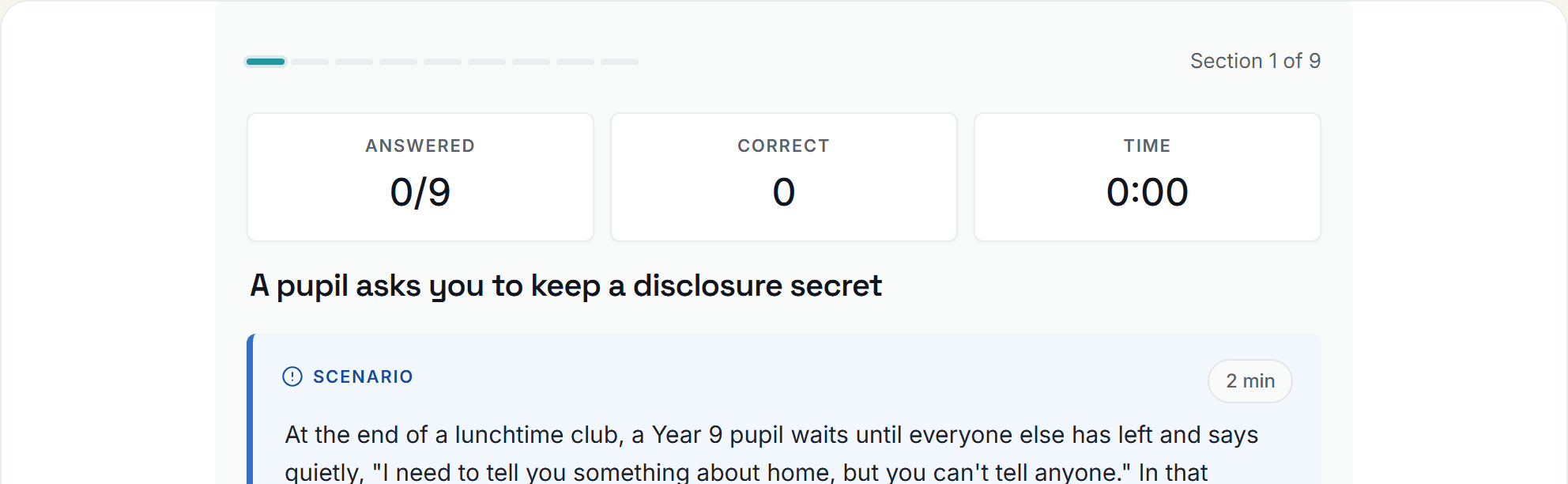
Year 9 Safeguarding Disclosure: Teacher Decision Path
A branching decision-path scenario that lets secondary teachers rehearse a Year 9 safeguarding disclosure, from a pupil's first words to the DSL handoff, before it happens for real.
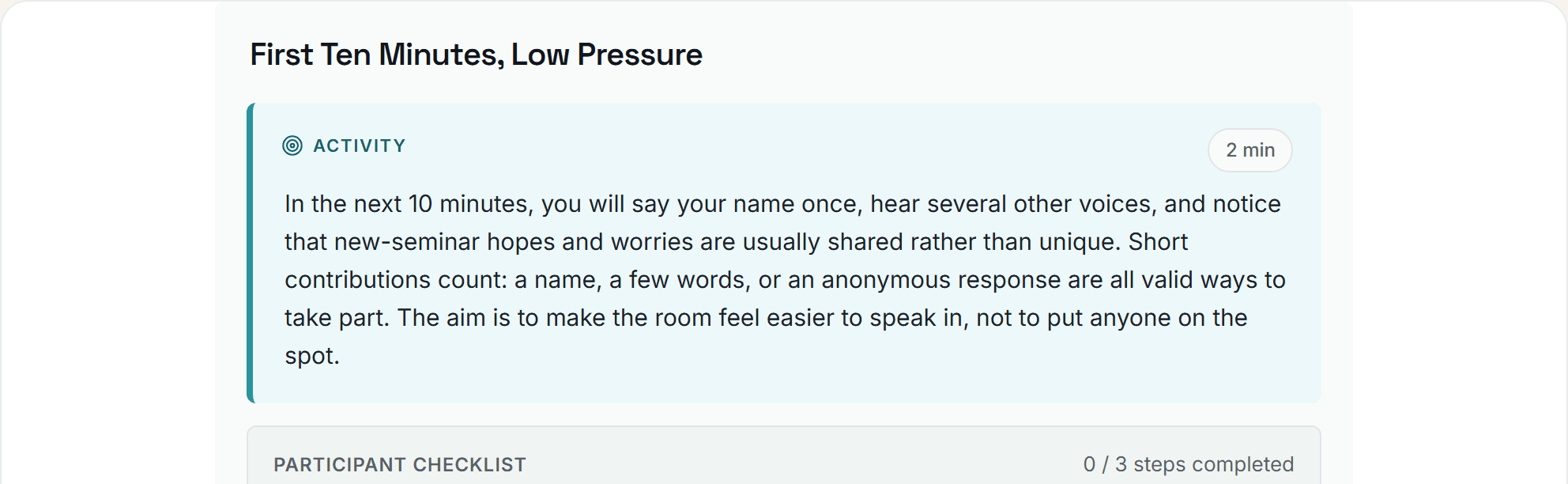
First Seminar Spark: Names, Hopes, and Check-ins
An estimated ten-minute first-seminar icebreaker example that moves from names to module hopes and a participant-linked concerns check-in.
Build your own version
Start from this prompt and make it yours.
Use this as an illustrative starting point, then generate and review a version tailored to your team, policy context and delivery workflow.